
What the brand needed
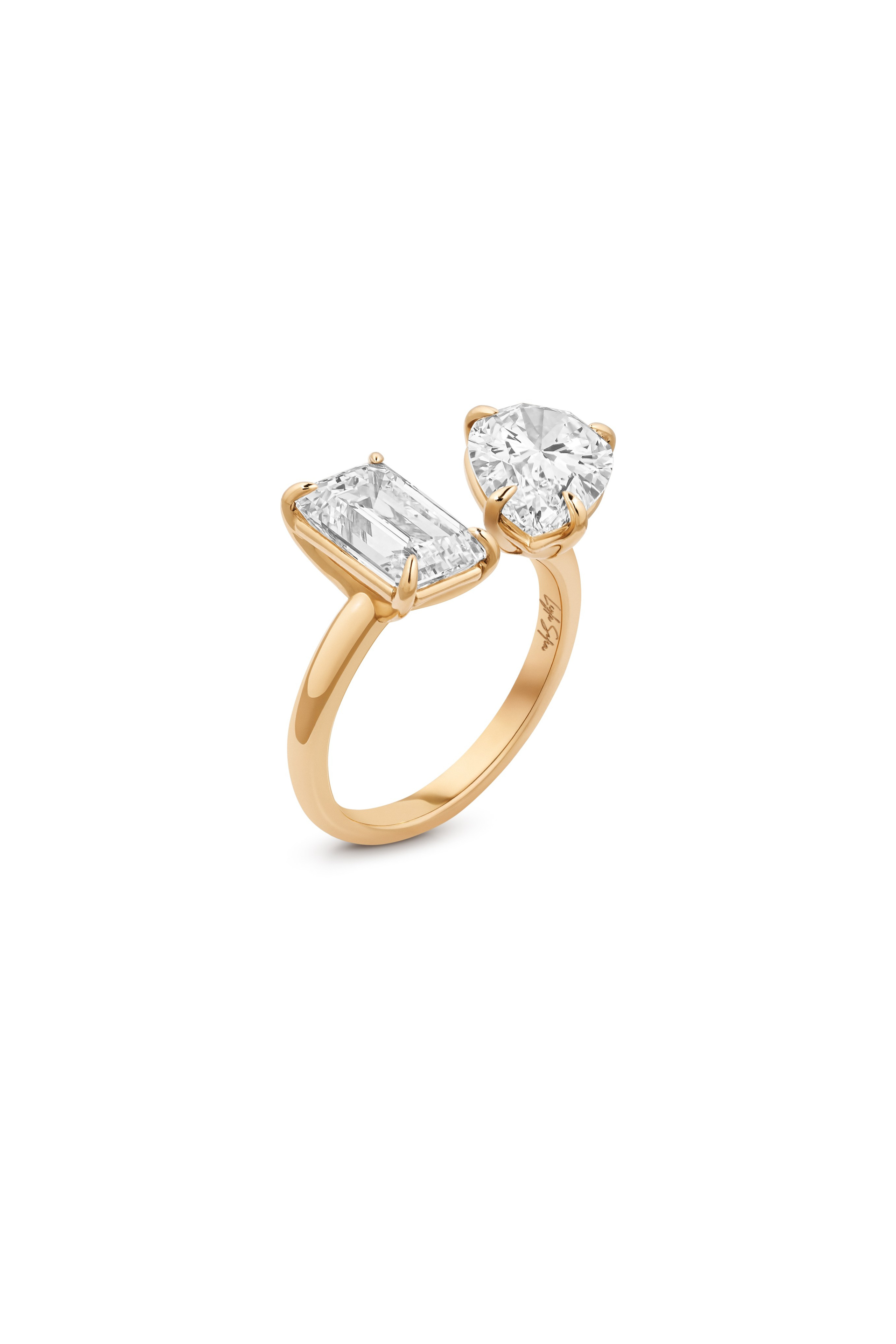
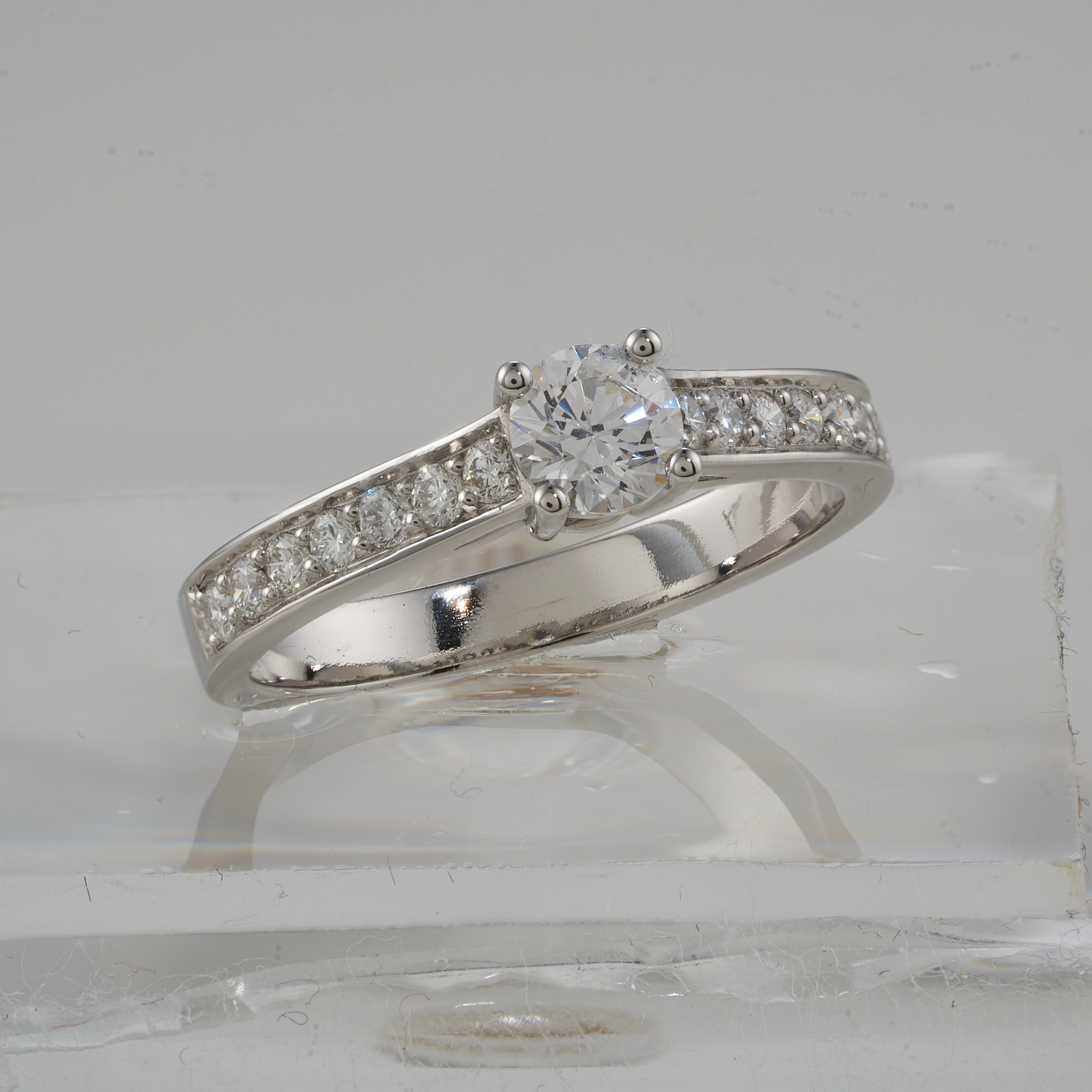
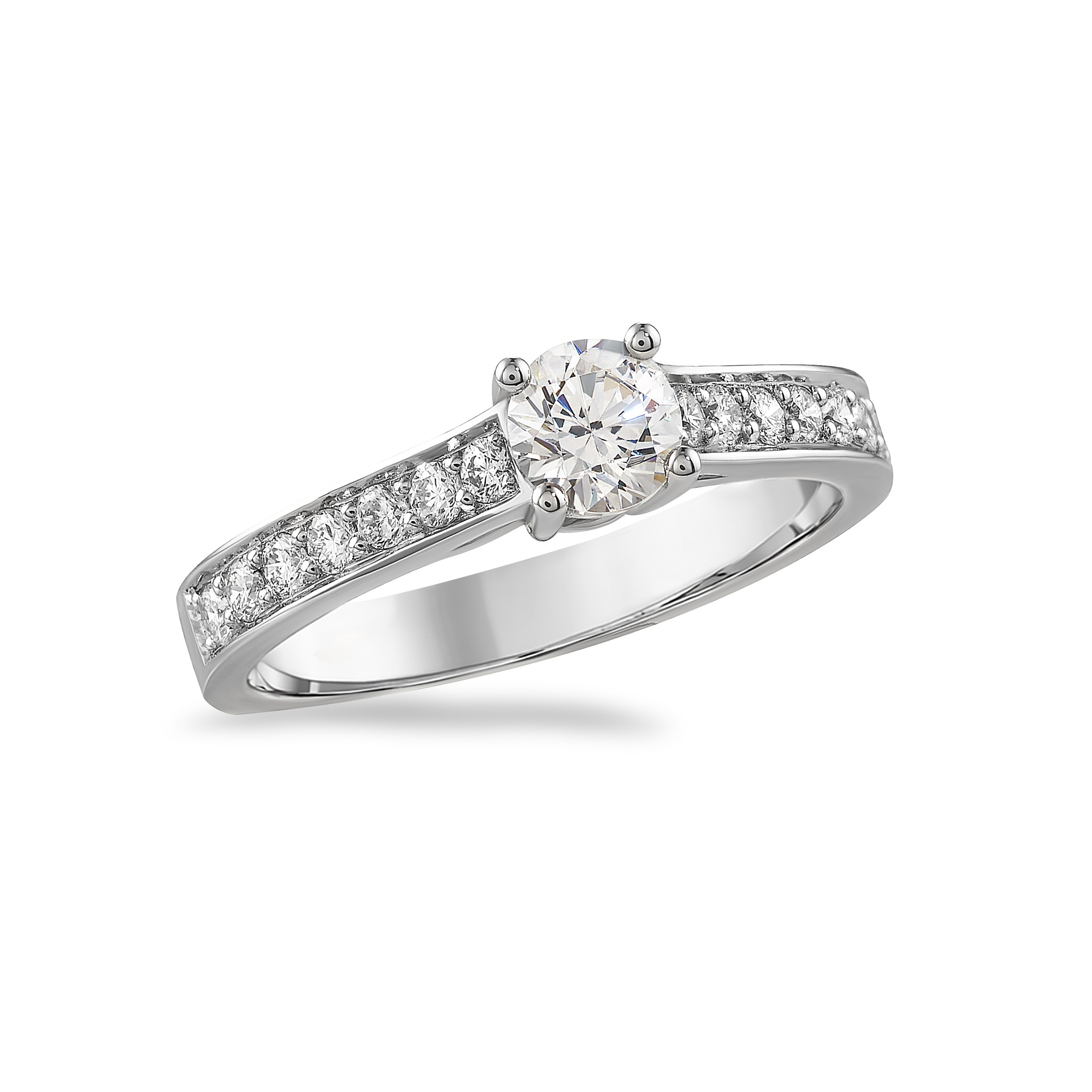
A complete ring collection for the product pages — thirty-five references that had to sit next to each other in the same grid without any of them standing out for the wrong reason.
In jewellery the hard part isn't one beautiful macro. It's consistency: the same relative scale, the same light direction and the same background across every piece, held through a single shoot day.
Open any jewellery store on your phone and scroll the grid.
The first ring looks good. The third sits slightly larger in its square. The sixth has its shadow falling the other way.
No single photo is wrong. Together, the collection falls apart.
And that’s the hard part in jewellery. Not the perfect macro of one piece: getting thirty-five to behave the same way.
What gets decided before the first frame
Four things. Settled at the start and untouched all day.
Relative scale. A signet ring and a thin band don’t take up the same real space, but they do have to take up a similar proportion of the frame. Move in on the thin one so its detail reads, and in the grid it’ll look bigger than the signet. And the customer gets a surprise when the box opens.
Light direction. If the shadow falls right on piece three and left on piece four, the whole row flickers. Nobody can say what’s wrong. Everybody notices something is.
Camera height. It changes the perspective. A ring seen from directly above and one seen from thirty degrees aren’t the same ring.
The background, at the same tone across all thirty-five.
None of this is hard to get right on one piece. What’s hard is holding it thirty-five times in a row in a single day.
Metal has no colour
This explains almost everything that goes wrong when you photograph jewellery yourself.
A matte surface has colour: it looks the same from wherever you stand. A polished one doesn’t. What you see is the reflection of whatever is in front of it.
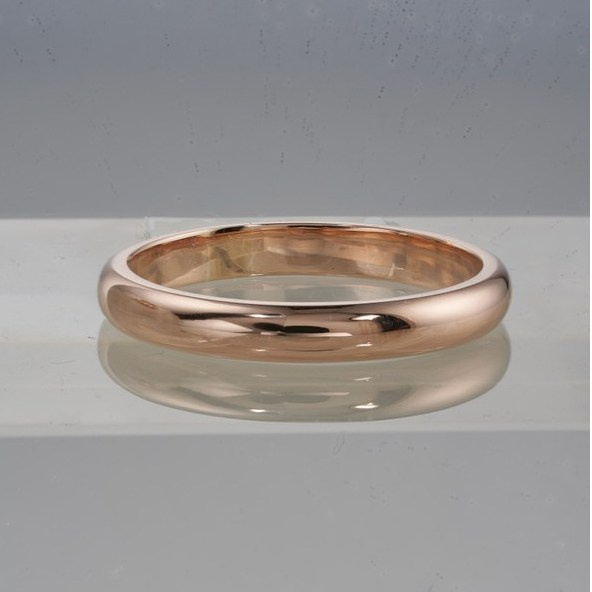
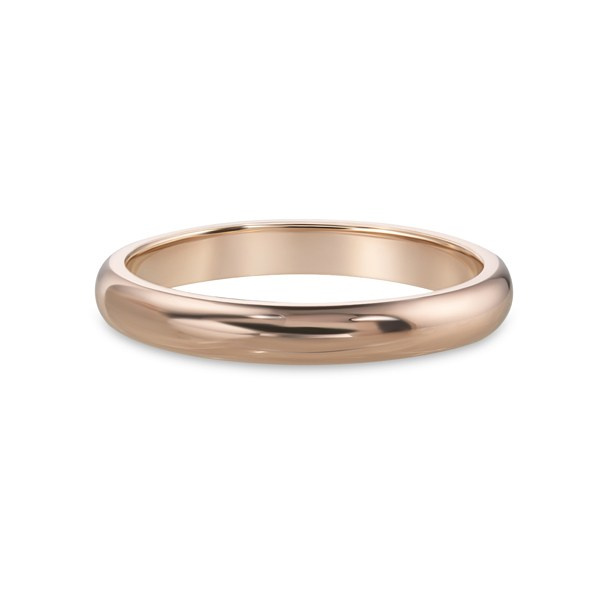
A gold ring on a white table in a white room reflects white. And it comes out as a uniform band, weightless, the colour of a toy.
So the question isn’t how to light the ring.
It’s what to put around it for it to reflect.
What brings gold alive is having something dark and something light to reflect at once. That contrast inside the surface itself is what your eye reads as weight, and as price.
Two angles per piece, and why you don’t need more
Seventy base captures for thirty-five references.
Two angles cover what a ring listing actually needs: the view that earns the click and the one that resolves the shape. A third would have multiplied the retouching without answering any new doubt.
And here’s what made the volume possible, which isn’t speed: the build happened once and wasn’t touched. Each piece went in and came out of the same position. The only thing that changed was the ring.
It’s the opposite of what happens with a mixed catalogue, where changing the build twenty times eats the whole day.
The retouching wasn’t cleaning
After the shoot day, all thirty-five pieces went through three things.
Colour correction against the physical sample, not against the screen. In jewellery a shade that doesn’t match is a straight return, because the customer bought that exact colour.
Macro cleaning, where absolutely everything shows. Including things you can’t see on the real piece with the naked eye.
A check against the series. And this is the step almost nobody does: every ring gets compared against the finished ones to verify scale, light and background all match.
A correct piece that doesn’t fit with the other thirty-four isn’t a success. It’s a problem.
The second layer: the rings worn
With the catalogue finished, a selection of images of the rings on a hand was added, generated from the real photographs.
We say so openly because it’s the method, not something to disguise.
The principle everything comes from: generation inherits whatever you give it. If the ring’s colour was captured properly against a physical sample, that propagates. If it wasn’t, you get twenty images with the colour wrong.
Which is why the order can’t be reversed. First a session that fixes shape, colour and detail. Then, if that kind of image is needed, generation on top.
What it solved for the brand: having the shot of the ring worn without building a separate day with casting, styling and image rights.
And what it wouldn’t have solved: if these rings were going to a marketplace, the main image would still have to be the real photograph. Accuracy is mandatory there and it isn’t open to interpretation.
What was delivered
The complete catalogue. The selection of images on a hand. And the record of which images involved generation and which didn’t.


Got a collection to photograph?
Tell us what it is, how many pieces and when you need it.