

Metal doesn’t have colour. It has surroundings
A matte surface has colour: you look at it and it reads the same from anywhere.
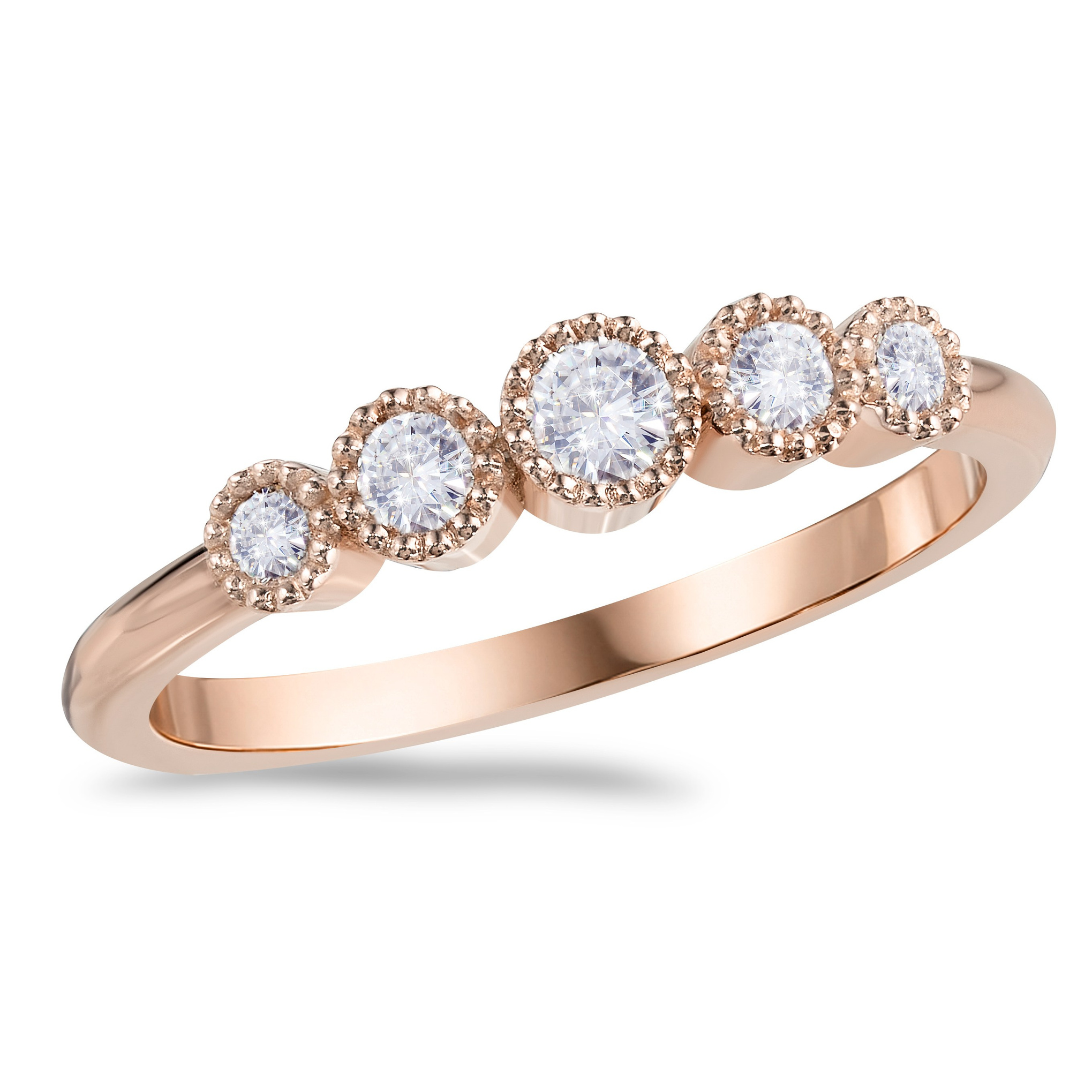
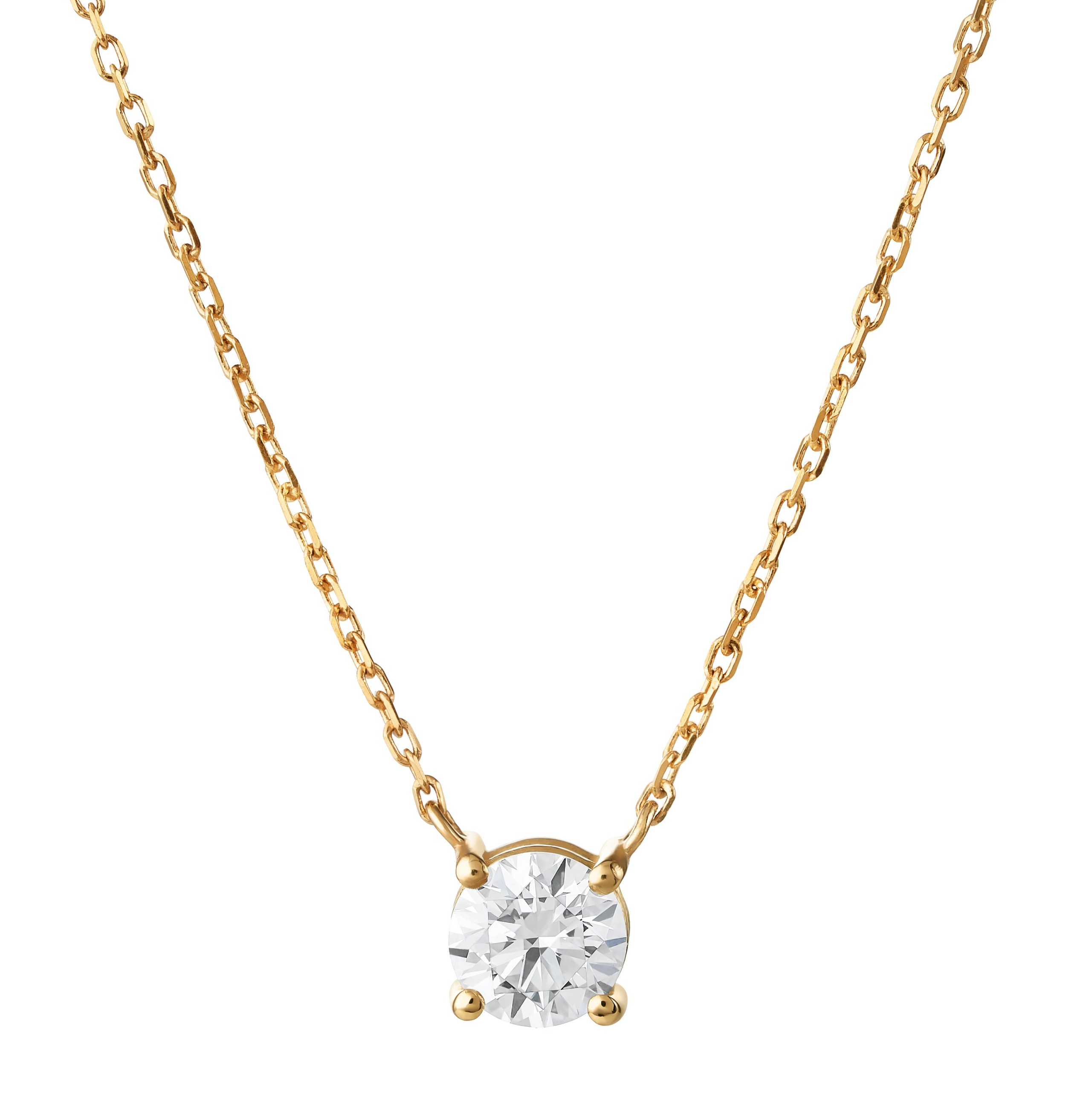
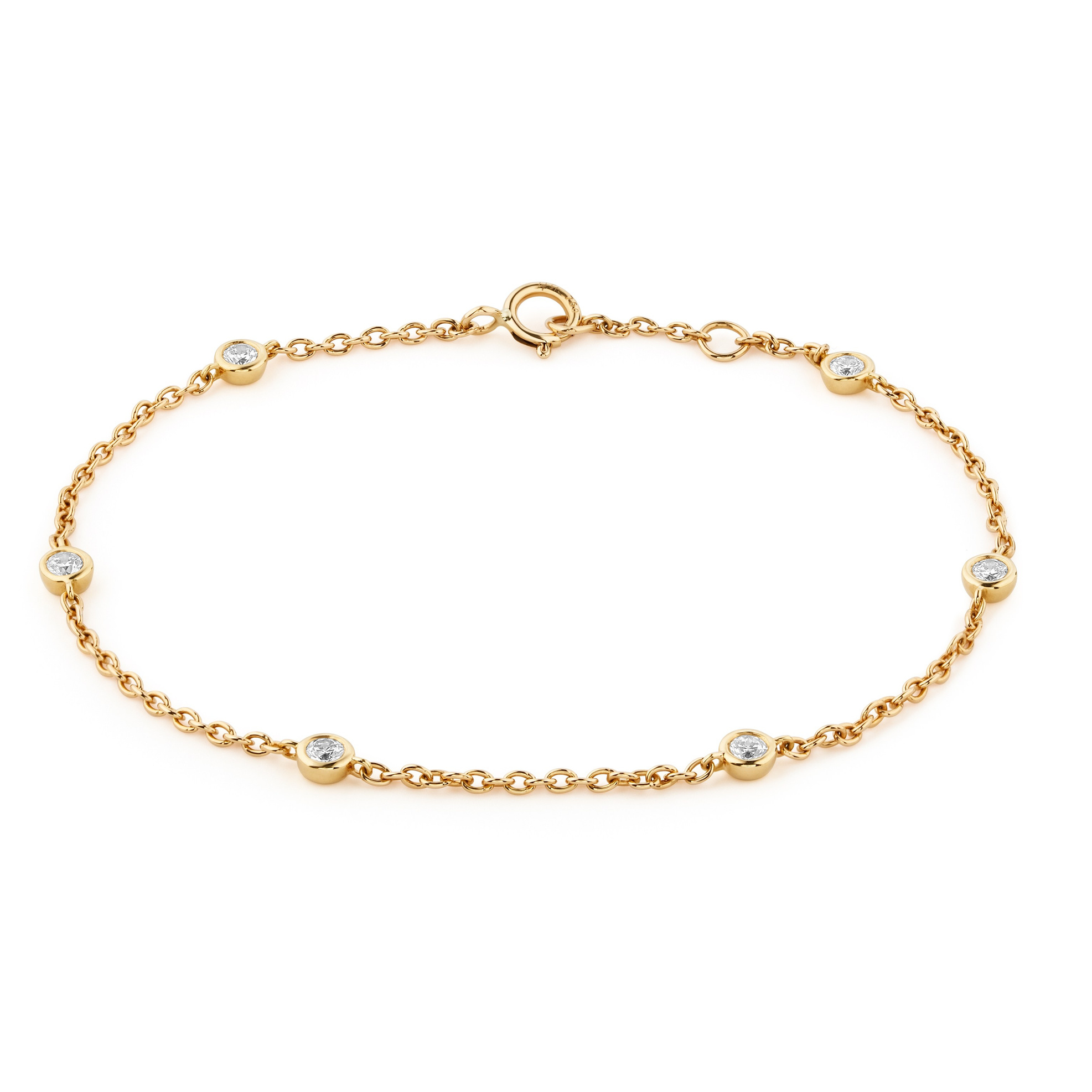
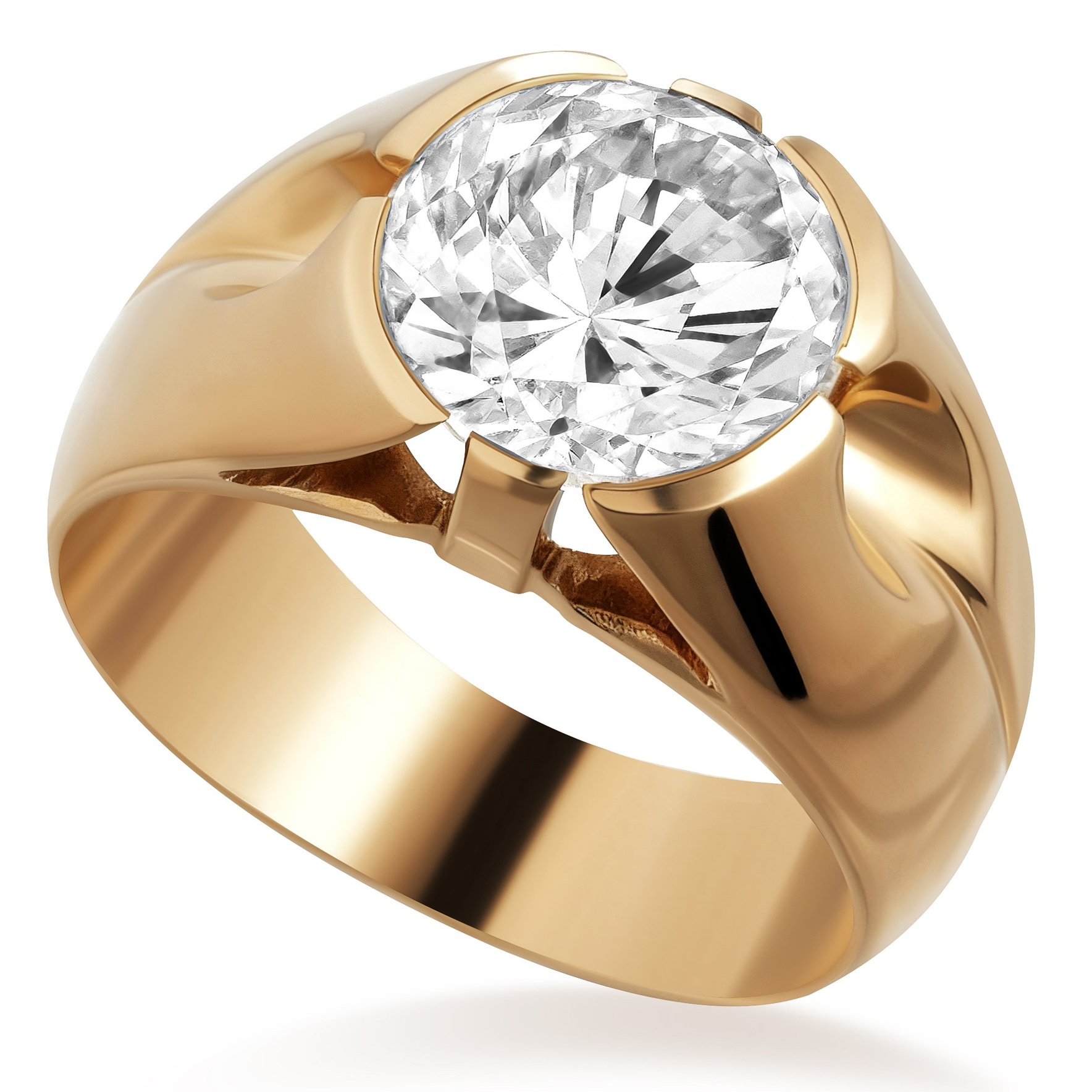
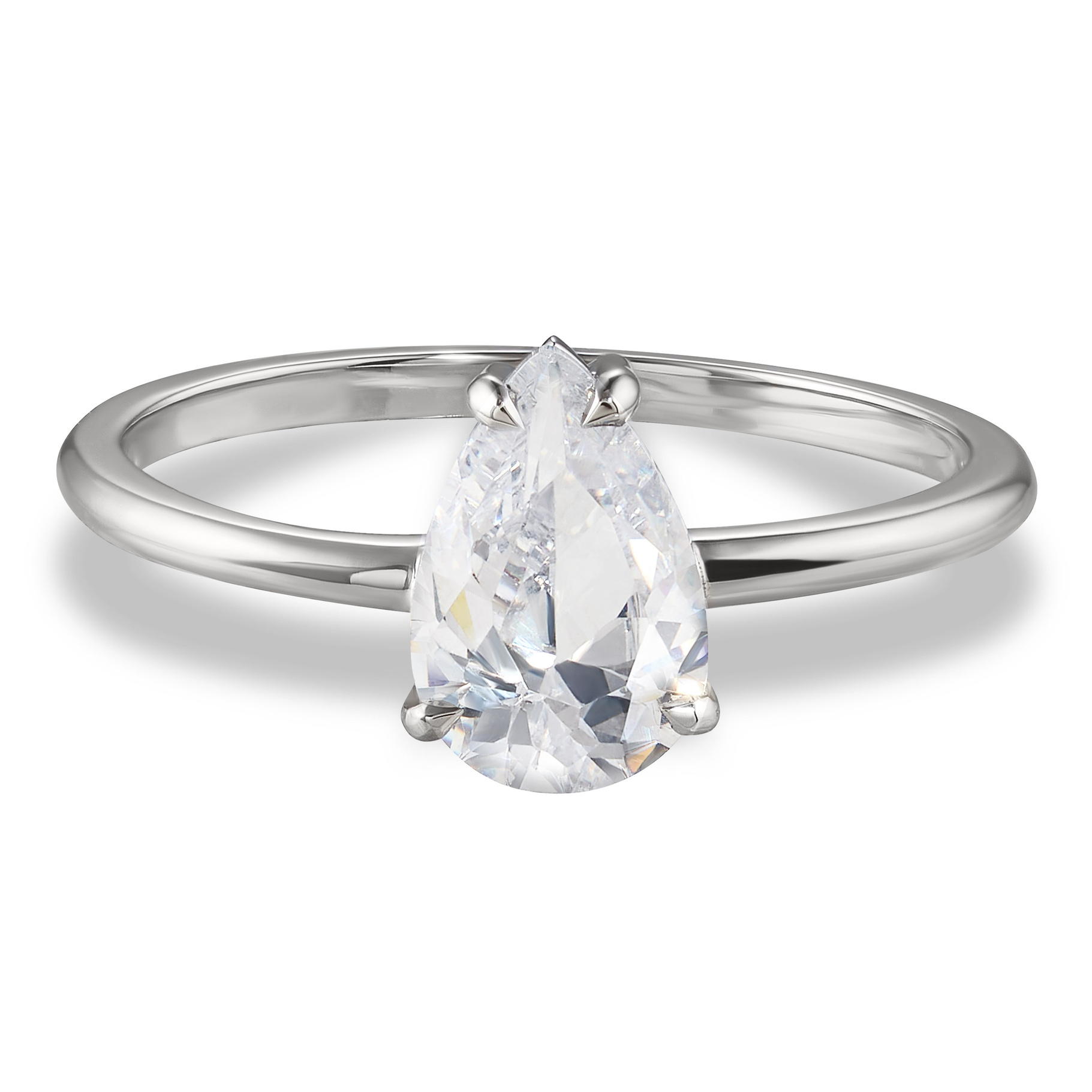
A polished surface doesn’t. What you see is the reflection of whatever is in front of it. A gold ring on a white table in a white room reflects white, and the result is a uniform piece with no volume: the famous yellow plastic.
Which is why the technical question in jewellery isn’t “how do I light the piece?” It’s “what do I put around it to be reflected?”
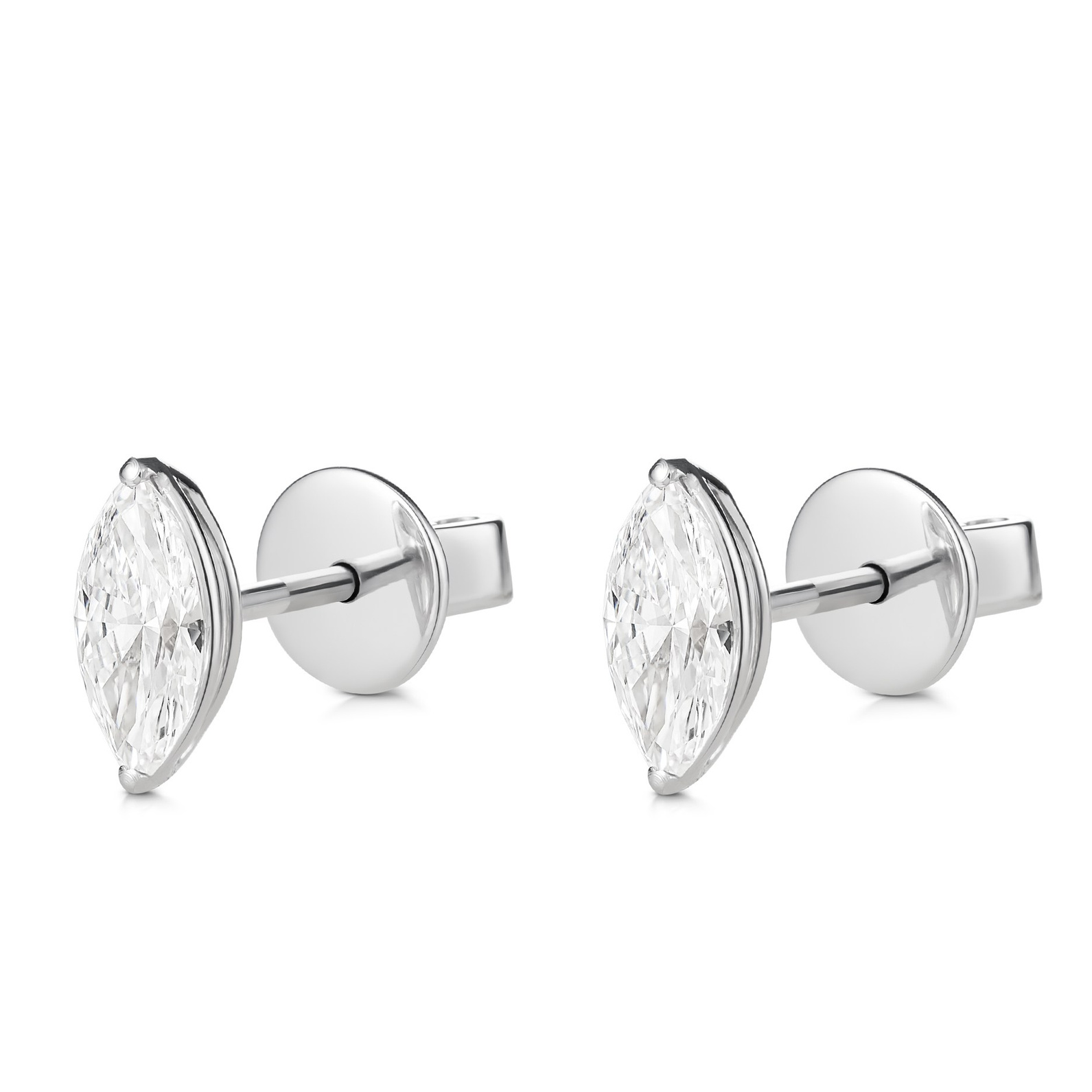
What brings gold alive is having something dark and something light to reflect at the same time. That contrast inside the metal itself is what the eye reads as volume, weight and quality.
What a phone does, and why it fails here
A phone does three automatic things that are exactly wrong for jewellery.
It averages exposure. It sees a small bright object on a large background and exposes for the background. The metal blows out.
It applies HDR. It compresses the range: shadows up, highlights down. On a polished piece that destroys precisely the contrast that made it look like metal.
It corrects colour by itself. And it sets white balance from the background, not the piece. Yellow gold on a warm background gets corrected toward grey.
It isn’t that phones are bad cameras. It’s that their automatic decisions are built for faces and landscapes, and a piece of jewellery is the opposite case to both.
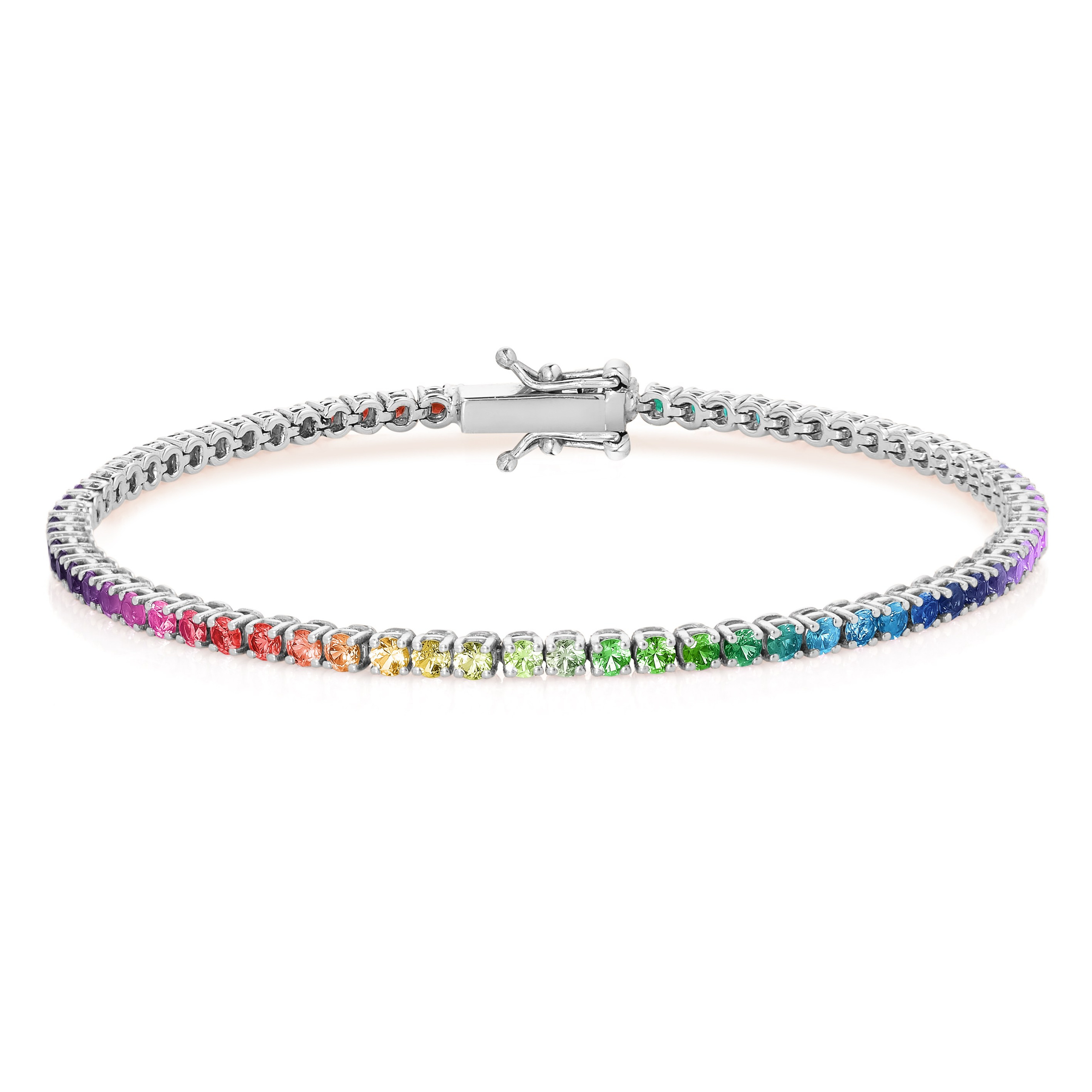
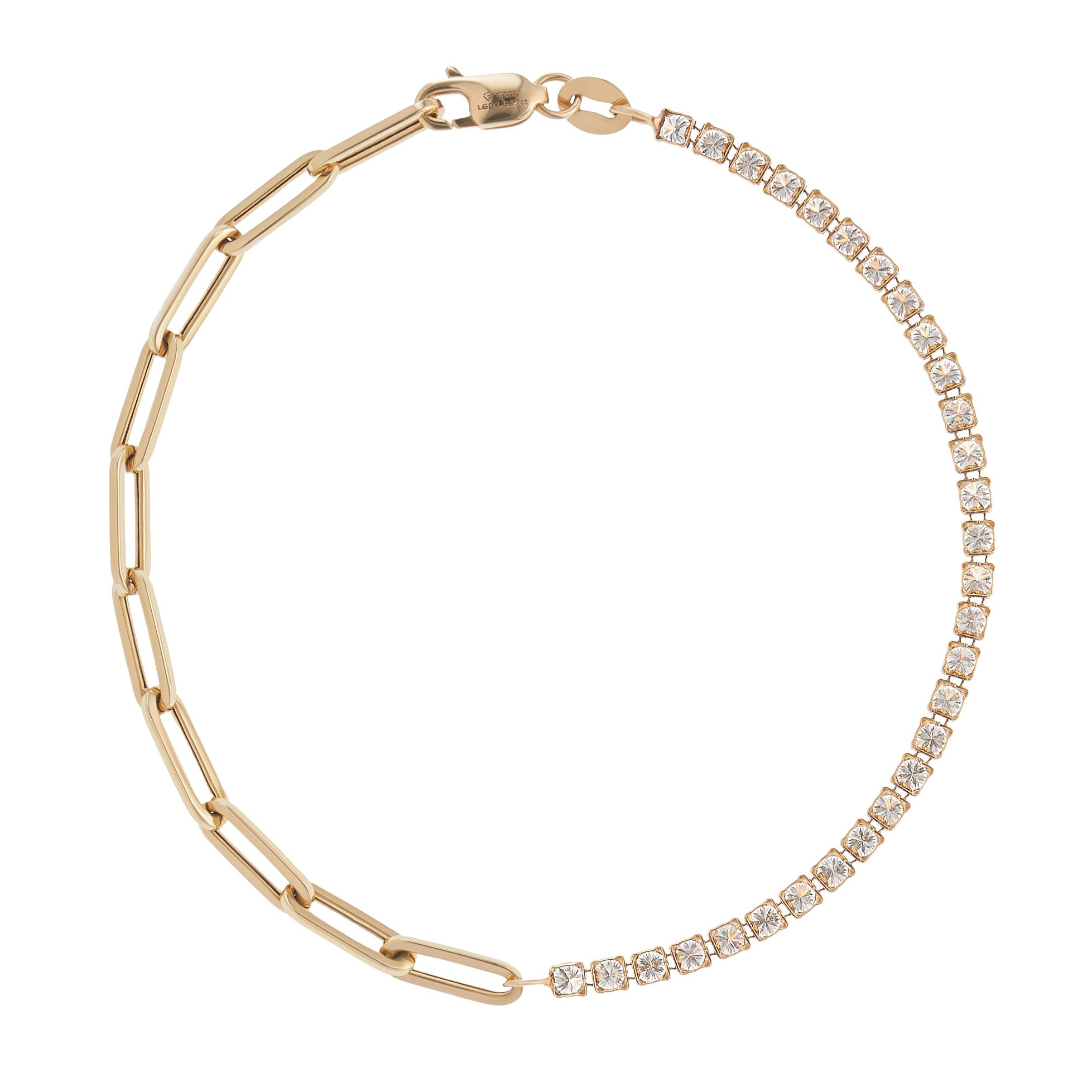
The pavé that turns into a grey line
Small-stone settings have a failure mode of their own.
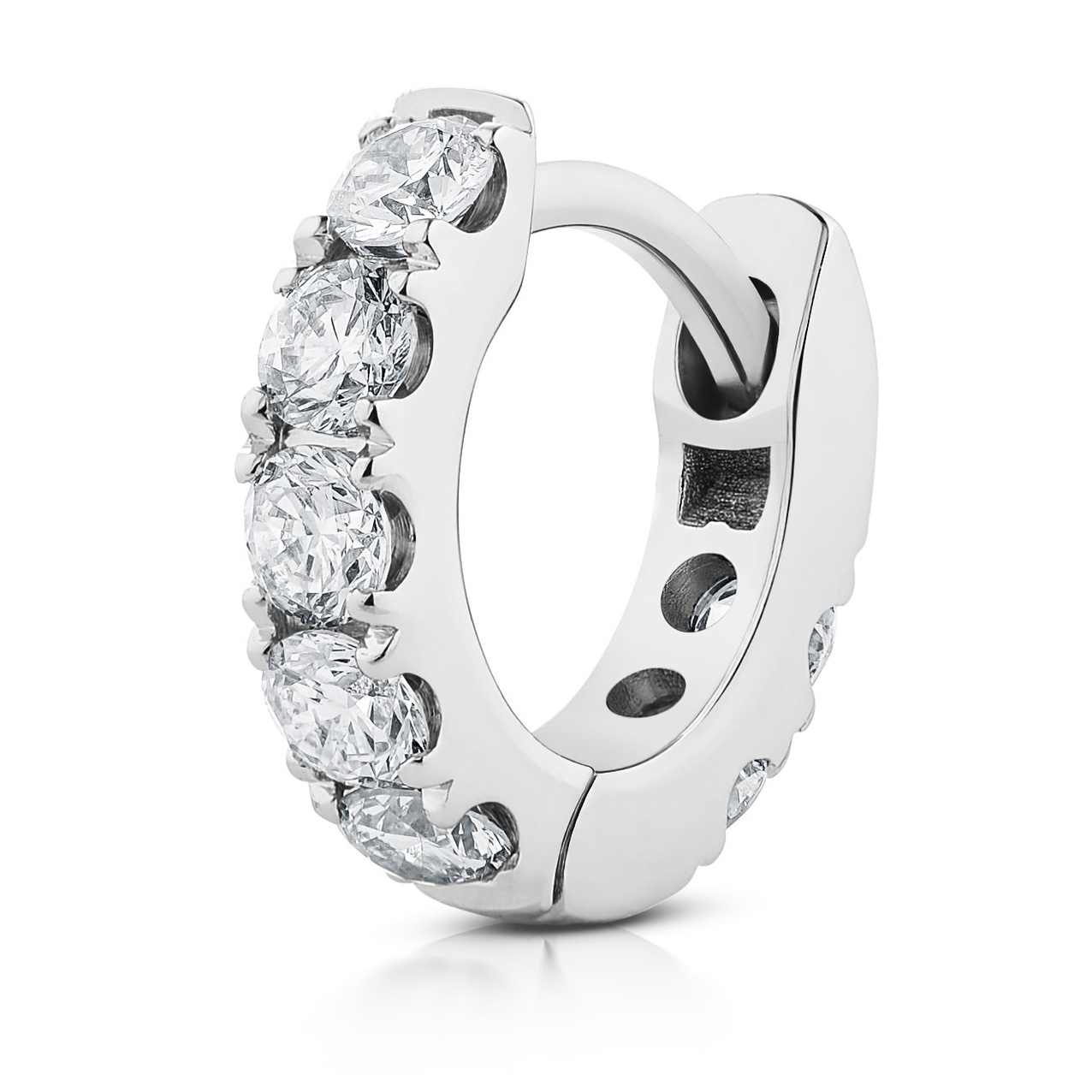
Under uniform diffused light, twenty stones together don’t separate: each returns the same value, there’s no shadow between them, and the pavé reads as a rough grey band. The buyer doesn’t see stones. They see texture.
Separating them requires each stone to catch its own glint, and that only happens with small directional sources placed deliberately. It’s millimetre work and it’s the slow part.
Stone colour and returns
Here the problem stops being aesthetic.
An aquamarine shot on a warm white balance arrives grey. An emerald with saturation pushed arrives dull. And in jewellery a colour that doesn’t match is a straight return, because the customer bought that exact shade.
It’s controlled with a physical reference sample and calibration, not by eye on a screen. That’s why we ask for the real piece rather than a previous photo, and why jewellery files take 14 working days rather than ten.
About depth of field
In macro, the zone in focus can be under a millimetre.
Which means on a ring shot close, either the front is sharp or the back is, never both. And a half-blurred piece of jewellery looks defective.
The fix is focus stacking: twenty to forty captures with the focus point moved between them, combined into one image sharp front to back. It sounds like a trick and it’s simply the only way a small piece reads whole.
What can be fixed and what can't
| Problem | Fixable in post? |
|---|---|
| Dirty or uneven background | Yes |
| Dust and lint | Yes |
| Badly placed environmental reflection | No — reshoot |
| Metal with no volume | No — it's lighting |
| Pavé with no separation | No — it's lighting |
| Stone colour captured wrong | Partly, with a sample |
| Insufficient focus | No — stacked in camera |
The three “no” rows are the expensive ones. That’s why in jewellery the cost sits in the shoot rather than in post, the reverse of other categories.
Before sending your pieces
- Are they clean and fingerprint-free? Polished metal records every one
- Is there a physical sample of each stone colour?
- Are the pieces in real size or in sample size?
- Are there several finishes of the same model?
- Do you need scale on a hand as well as the piece alone?
- Are the images for a listing, a campaign, or both?
The last one changes the whole shoot: a listing wants neutrality and a campaign wants atmosphere, and they don’t come from the same setup. The difference is explained in catalogue and campaign.
What you’re actually selling
Nobody buys gold for being yellow. They buy the sense that the piece has weight, that it’s well made, that it will look this good on their hand.
That sense lives entirely in the reflection. If the reflection is flat, the piece is flat, whatever it costs.

We control the reflected environment, pavé separation and colour against a physical sample.
Files in 14 working days.
A dial under glass: the problem nobody sees until they do
Why Amazon and Zalando Reject Your Product Photos
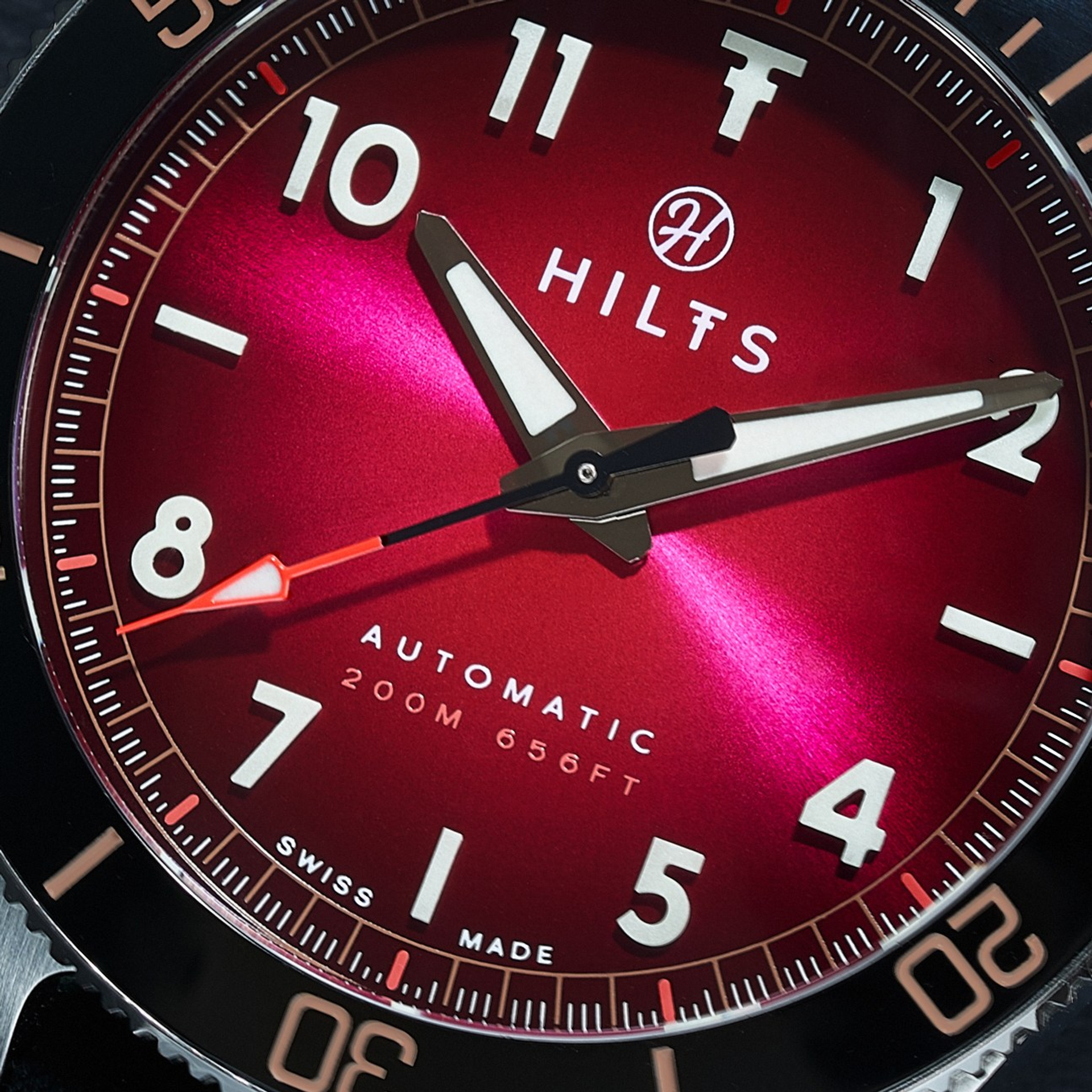
Why Do Watches Show 10:10 in Photos? Myths and the Real Reason
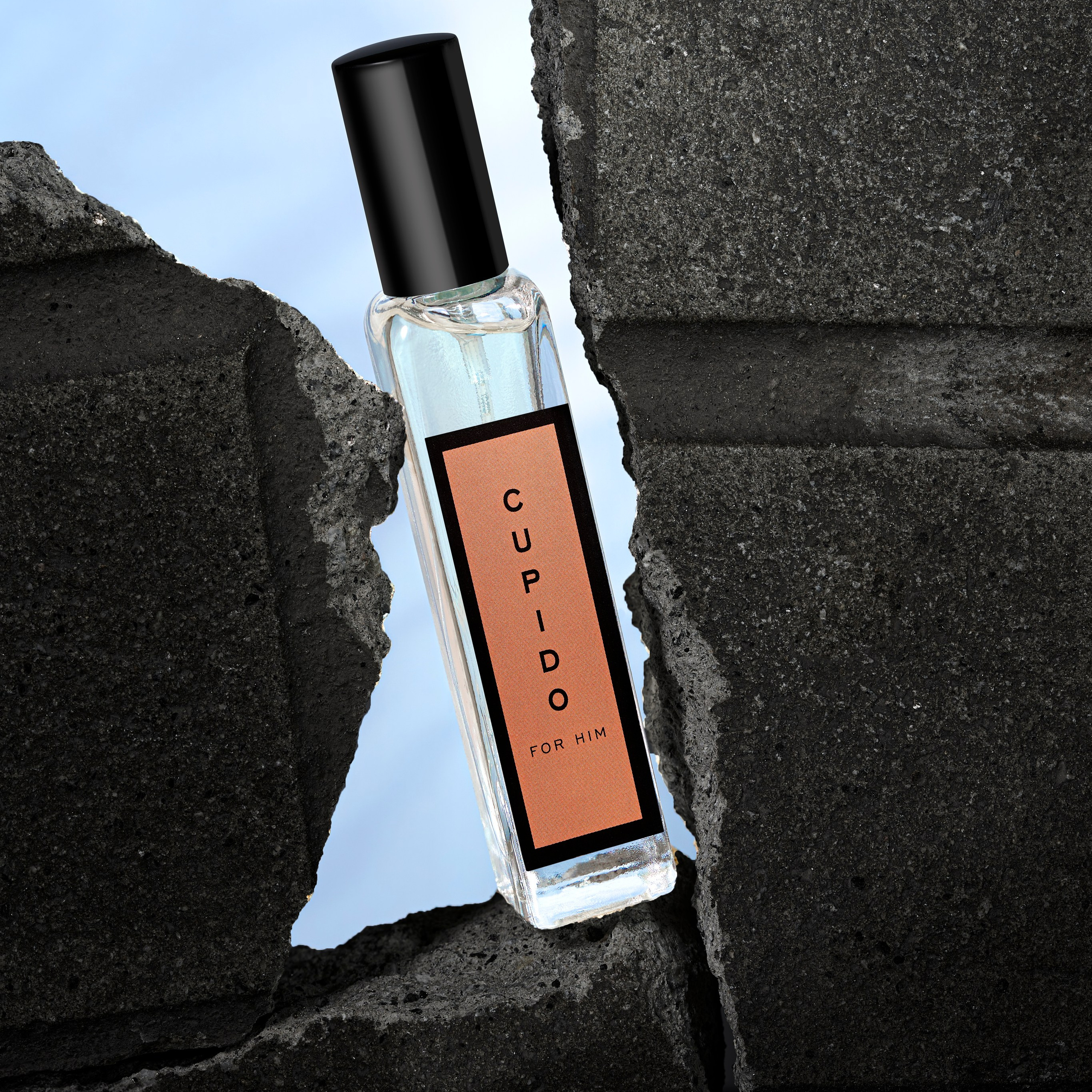
Still Life Photography in Barcelona: Complete Guide
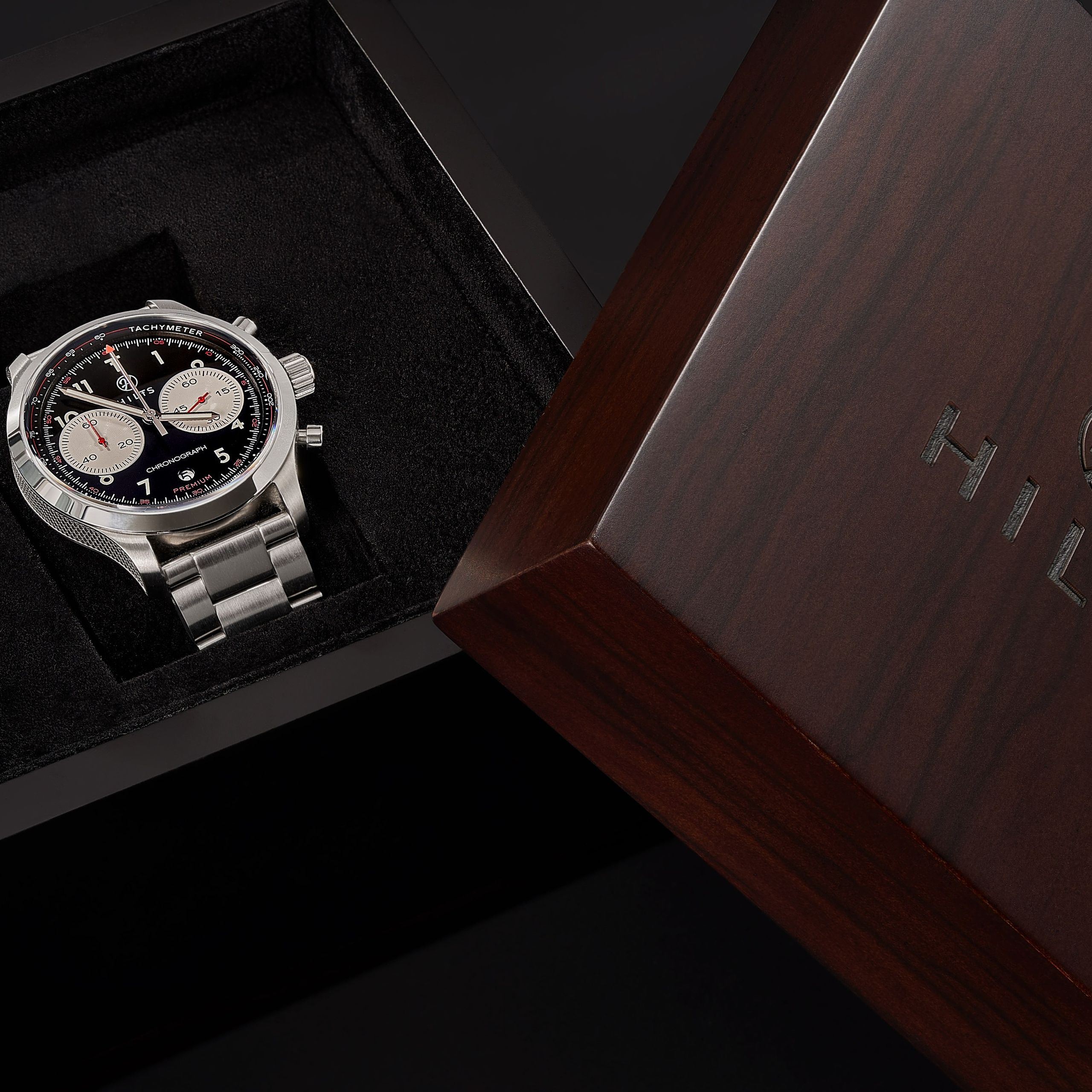
Photography for eCommerce: Keys to Boost Your Online Sales
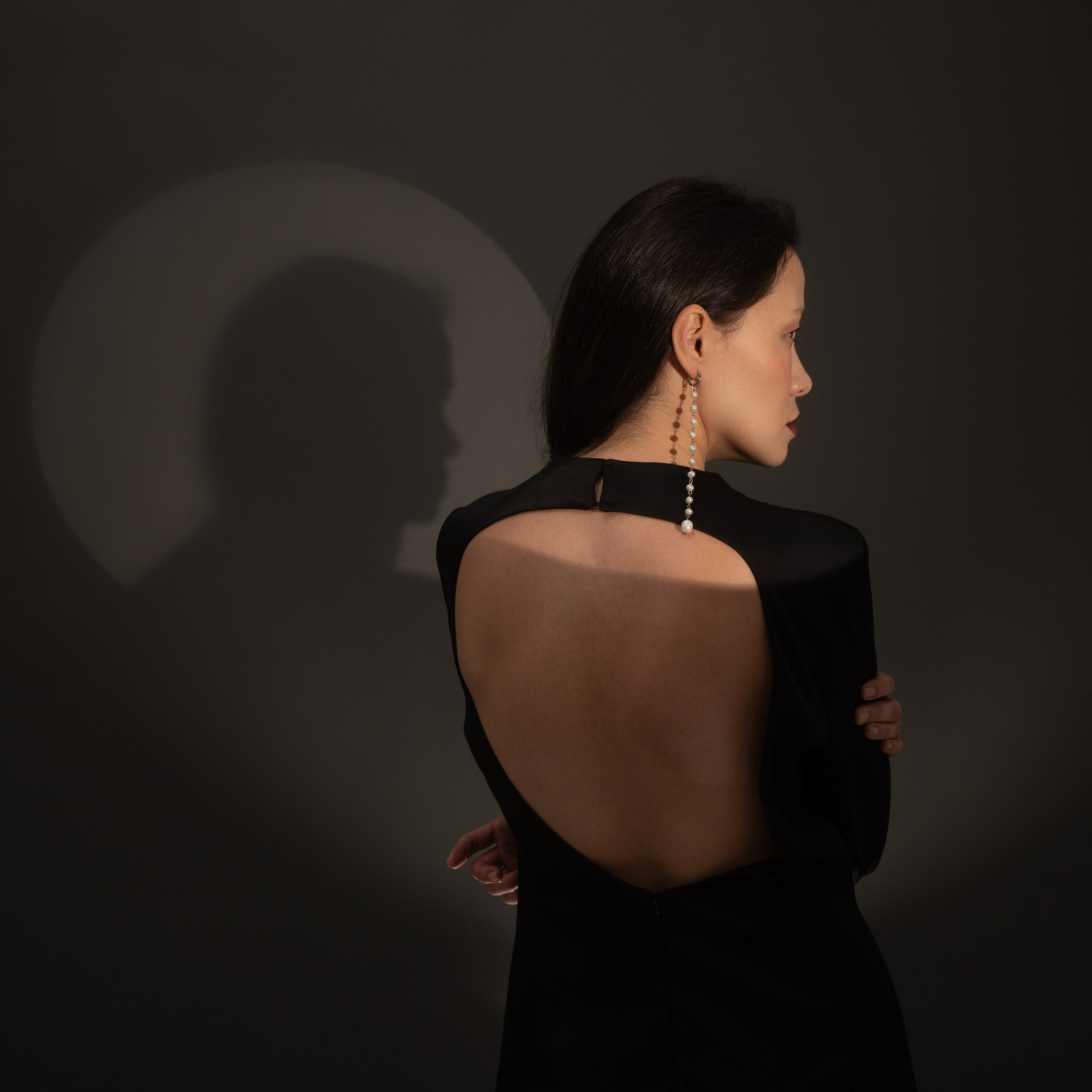
Product Photography for the Web in Barcelona: A Complete Guide to Improving Your Online Presence

What Does a Product Photographer Do and Why Does Your Brand Need One?
Photography for online stores – sell more by showcasing better.

360 Product Photography: Revolutionize Your Product Presentation

How to Take Stunning Product Photos at Home: Creative Photography Tips
Fashion and Apparel Photography for Catalogs and Lookbooks: Why Professional Images are Key for Your Brand
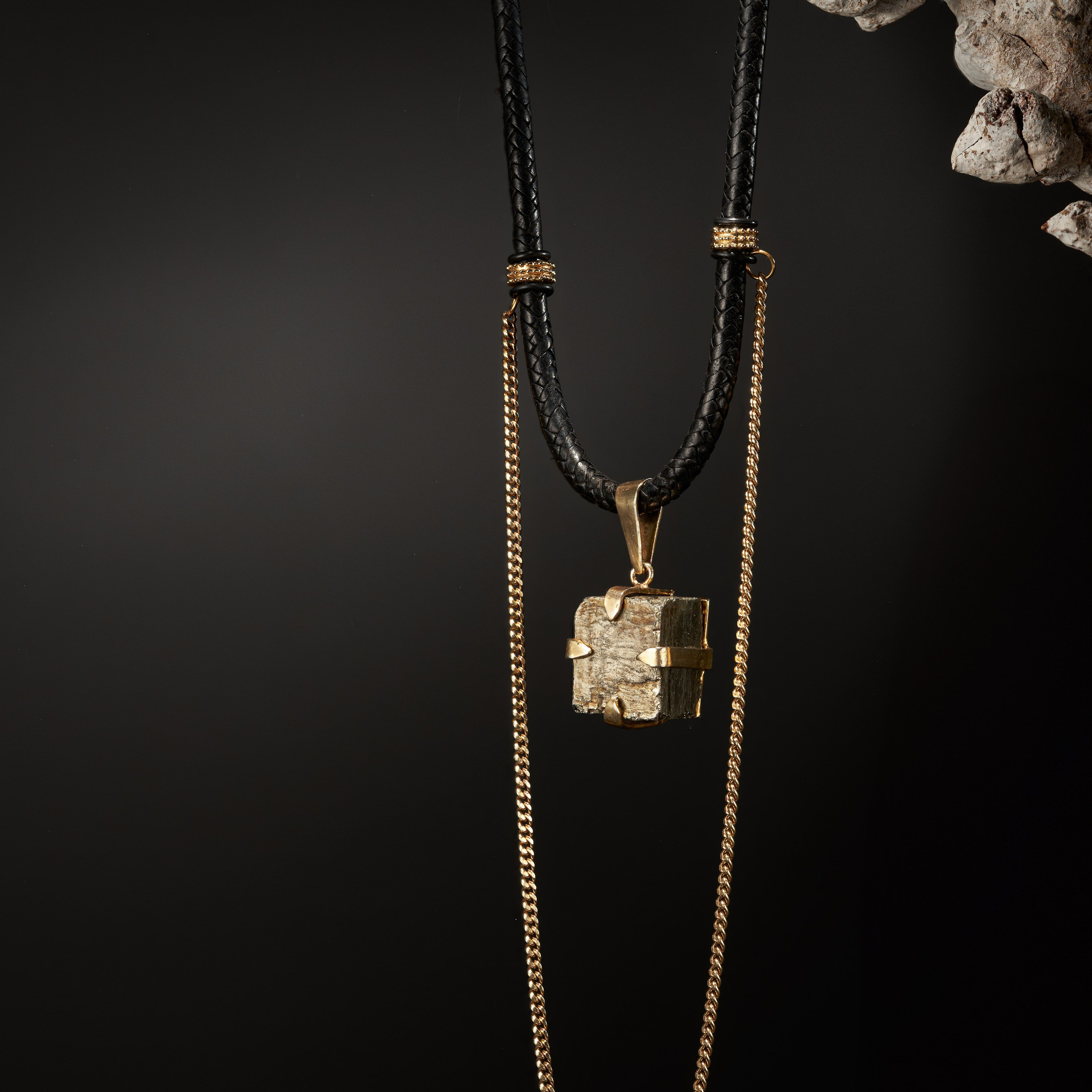
Jewelry and Product Photography for Catalogs in Barcelona: How to Attract Customers with High-Quality Images

Food Photography in Barcelona: Attract Your Clients with Mouthwatering Images
Product Photography in Barcelona
