
What the brand needed
Seventy-five pairs of warehouse stock that had to go on sale quickly, on the smallest budget the job allowed. Not a collection to show off — coverage, so every pair could be listed. And without moving a single box: the shoot happened in their own warehouse.
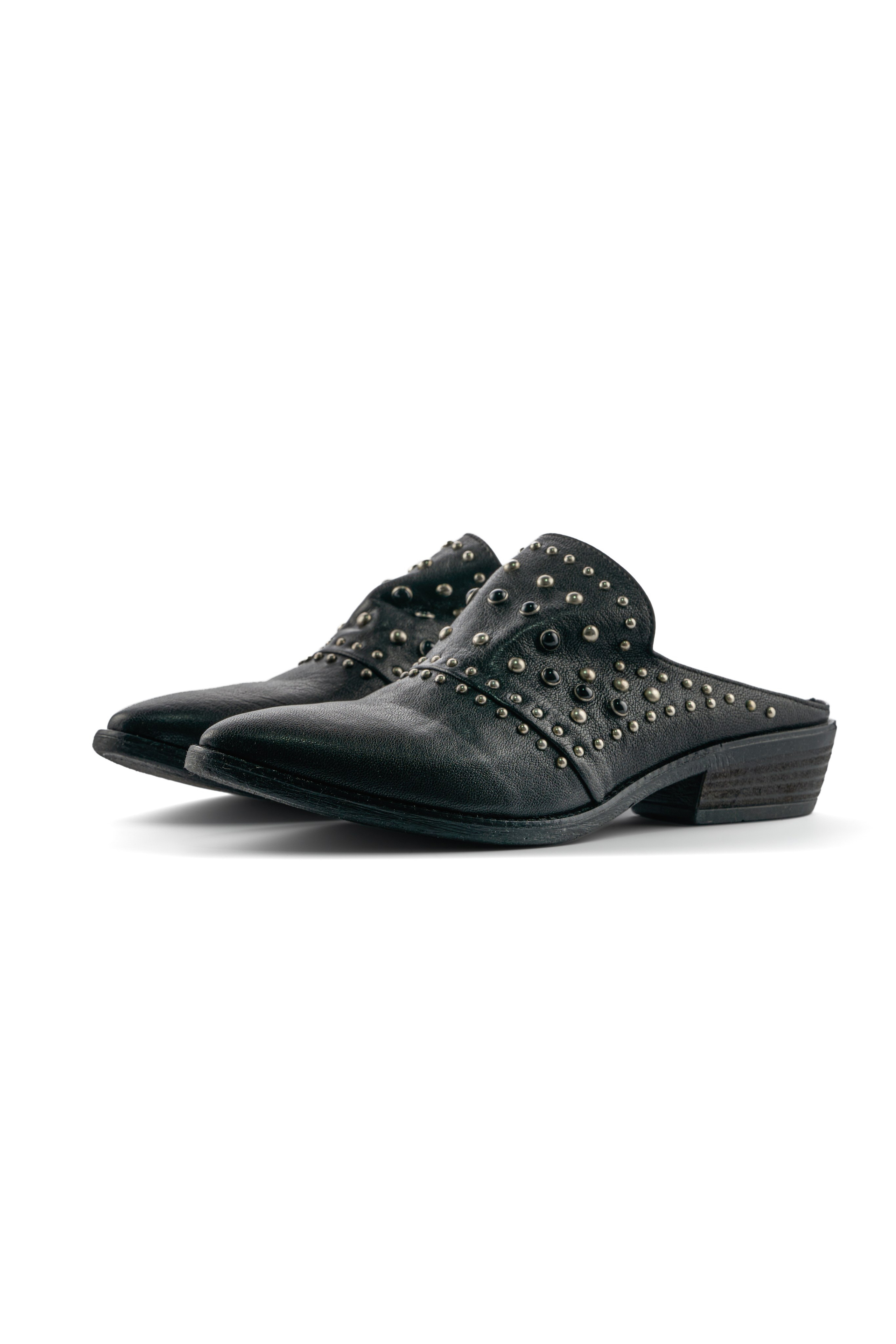
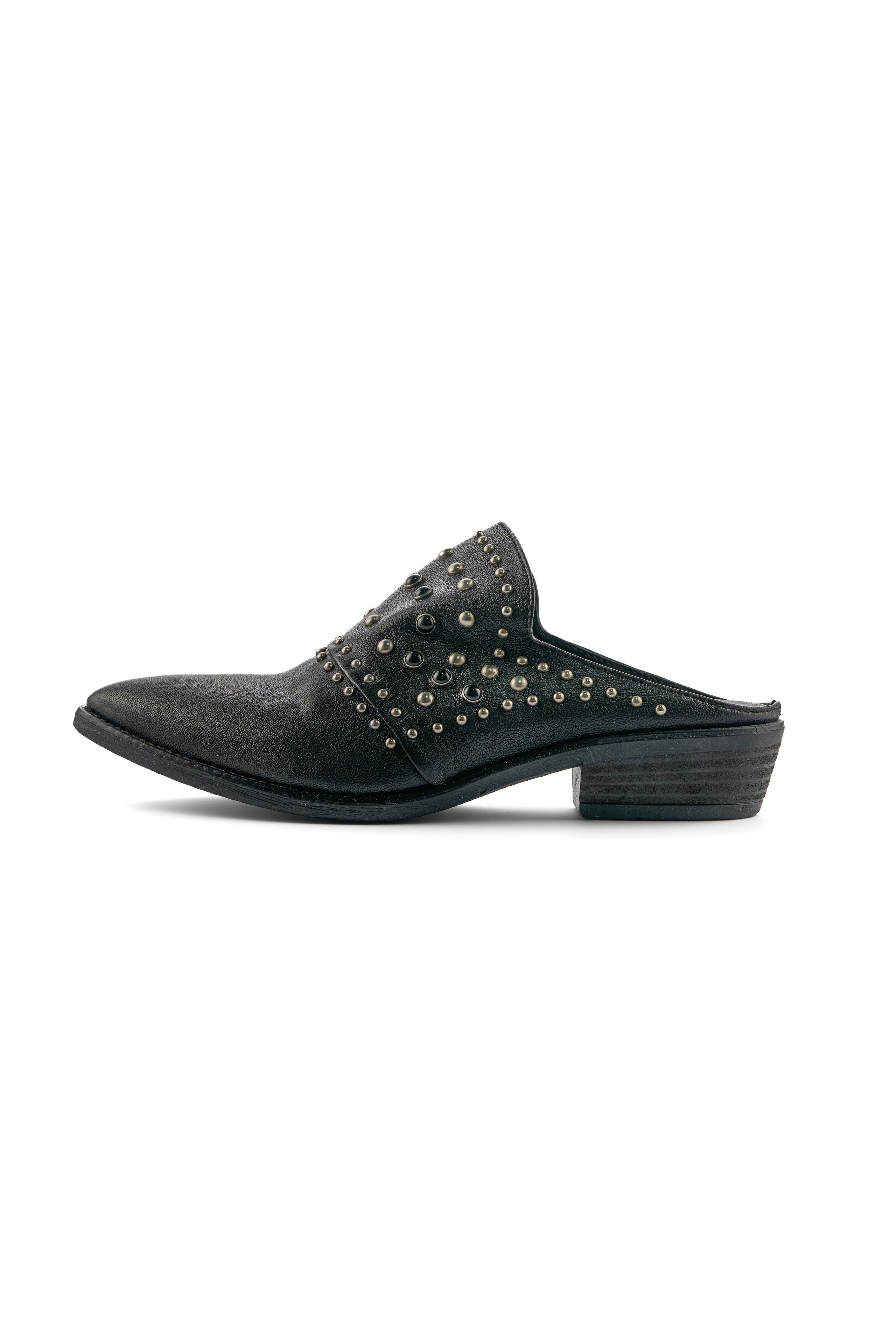
The full footwear set is eight shots per pair. Here it came down to two, and choosing which two was the actual work: the pair at three-quarters for shape and volume, one shoe in profile for the real silhouette.
The first decision wasn’t a photographic one
Before choosing a single angle, something else had to be solved.
Seventy-five pairs of stock aren’t a box. They’re a fair number of boxes, and moving them costs: packing every pair, transport, insuring them for their value, then returning them. With season remainders, that bill can eat the entire budget for the session.
So the footwear never left the warehouse.
The studio went there. Background, surface, lights, supports and camera, built on the spot where the product already was.
For the brand that meant zero logistics. Nobody packed anything, nothing travelled, nothing could be damaged in transit, and the stock stayed available to sell throughout the day.
What it meant on our side: a warehouse isn’t a studio. There’s no controlled light, none of the surfaces you’d want, and not the space you’d choose. All of it gets built on arrival, which is why the setup gets decided before leaving rather than on site.
Two angles, and why those two
The answer was two.
The pair at three-quarters. Both shoes together, turned. It’s the shot that earns the click: you see the shape, the volume, the instep and how the material behaves. A shoe head-on lies about volume; at three-quarters it can’t.
One shoe in profile. Here’s what decides the purchase in footwear: the real silhouette, the heel height, the shaft if there is one, the sole line seen from the side.
Between them they cover what someone needs to know before putting a pair in the basket.
We could have done top-down, material detail, low angle. They’d have looked fine and answered no new question.
What two shots leave out
And this has to be said, otherwise it looks like two shots are always enough.
The sole. On rain boots, technical trainers and workwear it’s the shot that decides entire purchases. It didn’t make it in here.
Material detail. Good leather or careful stitching needs its macro to justify the price. On clearance stock it matters less, because the argument isn’t quality, it’s price.
The shoe on a foot. On tall boots and heels it changes the purchase completely.
With new-season product at a premium price, two shots would be a mistake. With warehouse stock that has to move, they’re the right call.
The criterion isn’t “how many shots do I take”. It’s what doubt does your customer have before buying, and how many shots does answering it take.
How seventy-five pairs fit into four hours
A hundred and fifty captures in two hundred and forty minutes. Just over a minute and a half per capture.
It sounds impossible until you see where the trick is, and it isn’t shooting fast.
The build went up once and wasn’t touched. Not once in four hours.
And it’s worth remembering where: in a warehouse, not a studio. Putting it up there took its time, which is exactly why it never got touched again.
Each pair entered and left the same position, marked on the floor. The light didn’t move. The camera didn’t move. The only thing that changed was the shoe.
And the tasks run in parallel: while pair twelve is being photographed, thirteen is being cleaned and prepared, and eleven is going back in its box.
With one person doing everything in series, the camera would sit idle most of the time. That’s where the hours go, not in the shutter.


Why a homogeneous catalogue is so cheap
Here’s the part almost no brand has had explained to them.
The expensive part of a day isn’t the photos. It’s putting up the set. One to three hours of background, surface, lights and testing before the first frame.
That gets paid for once. From the second product on, each image costs minutes.
Which is why seventy-five similar pairs come out far cheaper per unit than fifteen pairs in different materials. With patent, suede and fabric mixed, the scheme would have had to change several times, and each change eats half an hour.
If you’re getting a quote for stock, group by material before you send the box. It saves more than negotiating.
The layer added afterwards: the footwear worn
With the catalogue finished, additional images of each pair worn on a model were generated, from those same photographs.
We say so openly because it’s the method.
Generation inherits whatever you give it. If the shoe’s shape and colour were captured properly, they propagate. If they weren’t, you get seventy-five images with the same error repeated.
Which is why the order can’t be reversed: first a session that fixes shape, colour and material. Then, on top, the generation.
What it solved: having the shot of the footwear worn without building a separate day with casting, styling and image rights. For clearance stock that day would never have happened. Not on judgement — on budget.
And what it doesn’t solve: if those pairs go to a marketplace, the main image still has to be the real photograph.


When this approach is the right one
Yes: warehouse stock, season remainders, clearance, wide catalogues of homogeneous product, brands that need coverage rather than showing off.
No: a season launch, premium product, footwear where the sole or the material is the argument, tall boots and heels where the foot changes the purchase.
It isn’t a cheap version of doing it properly. It’s doing it properly for a different goal.
What this case shows
That the work isn’t always in adding.
Given two conditions — fast and cheap — most studios answer by lowering the quality of all eight shots. The useful answer was a different one: keep two and do them well.
Knowing which two is what you’re commissioning.
Got stock to photograph?
Tell us how many pairs, in which materials and when you need it.